
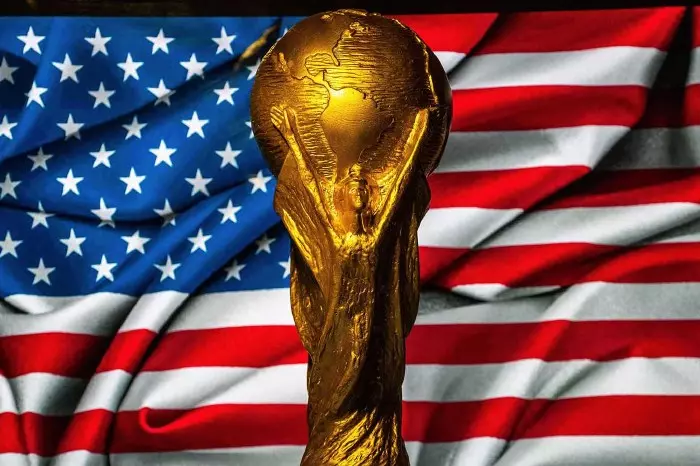
The expansion of the 2026 World Cup to 48 teams has created a unique landscape for bettors, blending traditional heavyweights with debutants and emerging nations.
With 12 groups and an additional knockout round, understanding which markets offer the best value is essential for navigating a tournament of this scale.
Here are five key betting markets and how to apply them to the upcoming summer schedule.
Match result (1x2)
The match result market, commonly referred to as 1x2, is the fundamental starting point for football betting as it covers the three primary outcomes of a 90-minute fixture: a home win (1), a draw (x), or an away win (2).
This market is particularly effective during the group stages, where historical pedigree and tournament experience often dictate the tempo of the opening games.
While host nations frequently benefit from home soil, the 1x2 market also allows bettors to capitalize on the psychological edge held by established powers who are accustomed to the unique pressures of a World Cup.
Take Mexico’s home opener against South Africa, for example. The Estadio Azteca is a venue where altitude and vocal support provide a tangible edge. For a fixture like this, the 1x2 market allows bettors to back the host’s momentum.
While the draw is always a threat in cagey openers, Mexico’s tactical stability under Javier Aguirre makes them a primary candidate for a straight win selection in the tournament's first 90 minutes.
Sometimes, it just pays to trust your instinct and do the obvious thing.
Asian handicap
Unlike the standard match result, the Asian handicap market is designed to eliminate the possibility of a draw and provide a more balanced betting proposition in matches with a clear favorite.
By applying a goal deficit to the stronger side or a head start to the underdog, the market shifts the focus from who will win to the specific margin of victory.
This is an essential tool for the 2026 tournament, as the expanded format naturally increases the number of fixtures between elite global powers and nations making their first appearance on the world stage.
For instance, Germany are expected to dominate their June 14 meeting with Curaçao, meaning their price in the 1x2 market will offer very little value.
However, utilizing an Asian handicap of -2.5 or -3.0 requires Germany to win by a clear margin of three or more goals to secure a payout.
This forces the bettor to analyze whether the heavy favorite possesses the clinical depth to maintain high intensity for the full 90 minutes, or if the debutant side has the defensive organization to keep the scoreline respectable. It is often the most effective way to extract value from the most lopsided fixtures on the schedule.
Both teams to score (BTTS)
The both teams to score market focuses solely on whether both sides find the back of the net during the match, regardless of the final scoreline.
This strategy typically thrives during the initial round of group fixtures when physical energy is at its peak and defensive units have not yet established their peak tournament cohesion.
It is particularly effective for matchups involving sides that utilize high-pressing systems or transition-heavy tactics that naturally leave space in the defensive third for opponents to exploit.
Canada’s clash with Bosnia and Herzegovina on June 12 serves as a prime example for this market. Jesse Marsch’s Canada are defined by an aggressive vertical style that prioritizes winning the ball high up the pitch, while Bosnia possess the clinical finishing talent of veterans like Edin Dzeko.
When two mid-tier nations are chasing a pivotal early advantage in a competitive group, the tactical trade-off between offensive risk and defensive security often makes the BTTS selection the most logical angle.
Over/under goals
The over/under market involves predicting whether the total number of goals scored by both teams will be above or below a specific line, which is most commonly set at 2.5 goals.
This market relies on a deep assessment of the tactical philosophies of the managers involved rather than simply looking at the star power available on either team.
While opening group matches can be expansive, fixtures between tactically rigid nations in high-stakes environments often trend toward lower totals as the fear of a costly loss outweigh the desire to overcommit in attack.
England’s meeting with Croatia on June 17 is a fixture that has historically been defined by cagey midfield battles and disciplined defensive structures.
Given that both sides possess elite organizational floors and a shared history of controlled tournament encounters, the under 2.5 goals line represents a strong tactical play.
This market allows bettors to capitalize on the expectation of a disciplined, defensive-minded contest without needing to commit to a definitive winner in a game where a draw would likely suit both camps.
Double chance
The double chance market allows bettors to cover two of the three possible outcomes in a single selection, such as an away win and a draw. High-profile nations can suffer from early rust or struggle to break down a well-drilled, resilient underdog.
It offers a strategic path to backing a disciplined side to frustrate a superior opponent, providing a payout if the match ends in either an upset victory or a hard-fought stalemate.
Norway’s fixture against Iraq on June 16 provides an interesting scenario for this market. While Norway have world-class individual talent in Erling Haaland and Martin Ødegaard, they have frequently struggled for consistency and cohesion on the international stage.
Iraq are a physically resilient side capable of maintaining a deep defensive block for long periods to frustrate technically superior opponents.
Backing Iraq or a draw in the double chance market provides a safety net for those who anticipate that the favorite may find it difficult to translate their individual quality into a winning performance.